


The global boom in longevity wellness
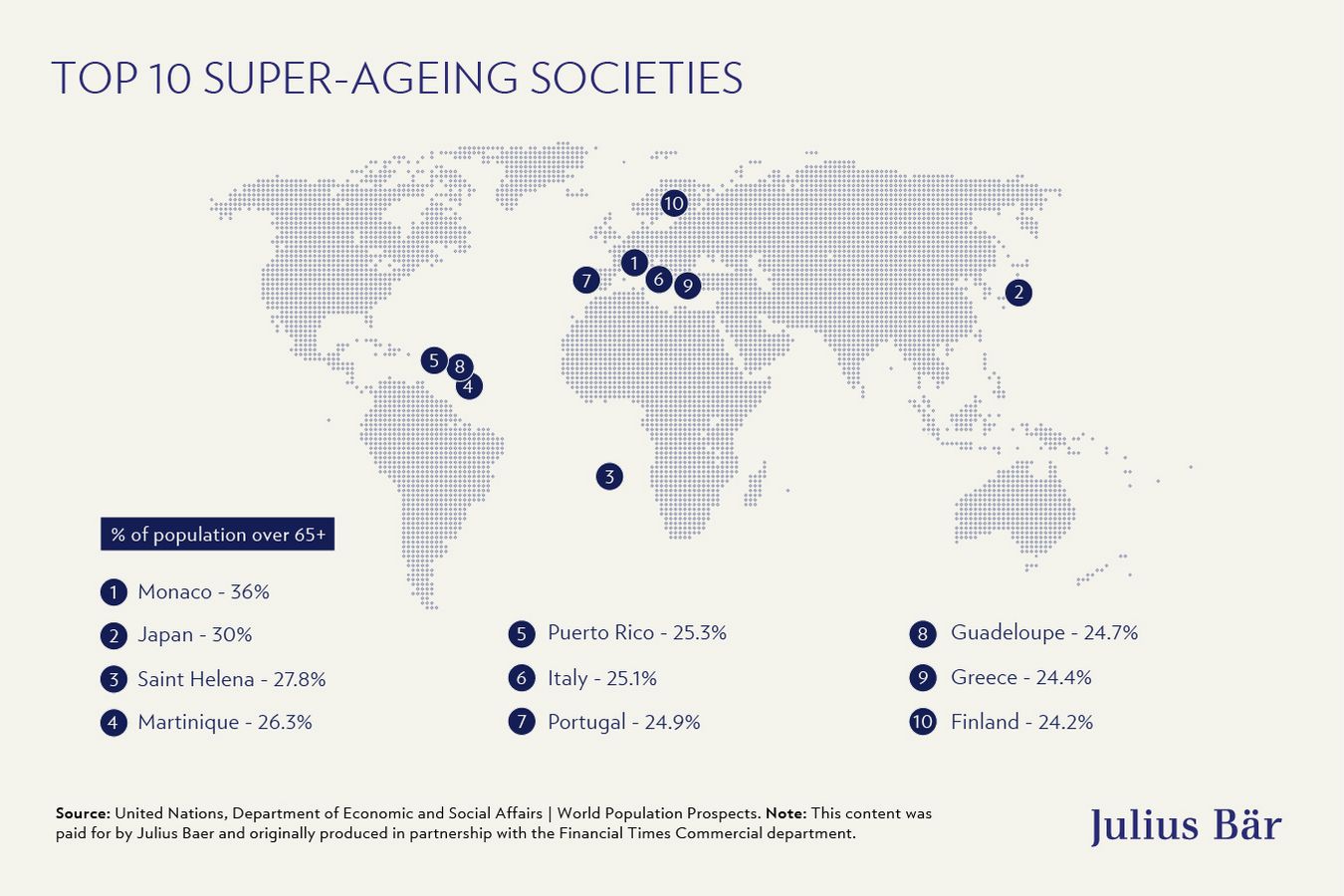
According to the UN, the Earth is now home to more than 8bn inhabitants, with the global population expected to reach 9.8bn by 2050. The number of adults aged 65 and over is also expected to increase, encompassing more than 25 per cent of the population in Europe, North America and Asia-Pacific. The world’s population is getting older because of a decline in maternity fertility and infant mortality, and an improvement in life expectancy owing to advances in medical care, hygiene and diet.
An ageing world
The global population aged over 65 is projected to double over the next 30 years
A wellness economy
This demographic shift presents opportunities. The megatrend of an ageing population has led to the development of products and services that cater to older adults’ health and wellness. The chief executive officer of Clinique La Prairie, Simone Gibertoni, says: “The global wellness economy has ballooned to more than $6tn in value and, within that, the longevity-focused market is forecast to reach around $610bn by 2026. This ‘longevity economy’ – affluent, health-conscious individuals seeking to extend their healthy years – is driving growth across continents.”
The business of living well
This development means that citizens consider health span (how long they remain healthy, active and free from serious illness), as their lifespan (the total years of life a person lives) increases. “Health is sometimes called the new wealth, and we see that mindset fuelling demand for longevity programmes, personalised medicine and age-defying therapies,” says Gibertoni.
Yet as hard as individuals work to improve their longevity by leading a wholesome lifestyle, their physical and social environments can affect health, too – directly or via barriers or incentives that affect access and decisions about health behaviour. While wealth may not equal health, it may enable people to live better for longer, and health and longevity are increasingly important to high-net-worth individuals, as a 2025 survey reveals.
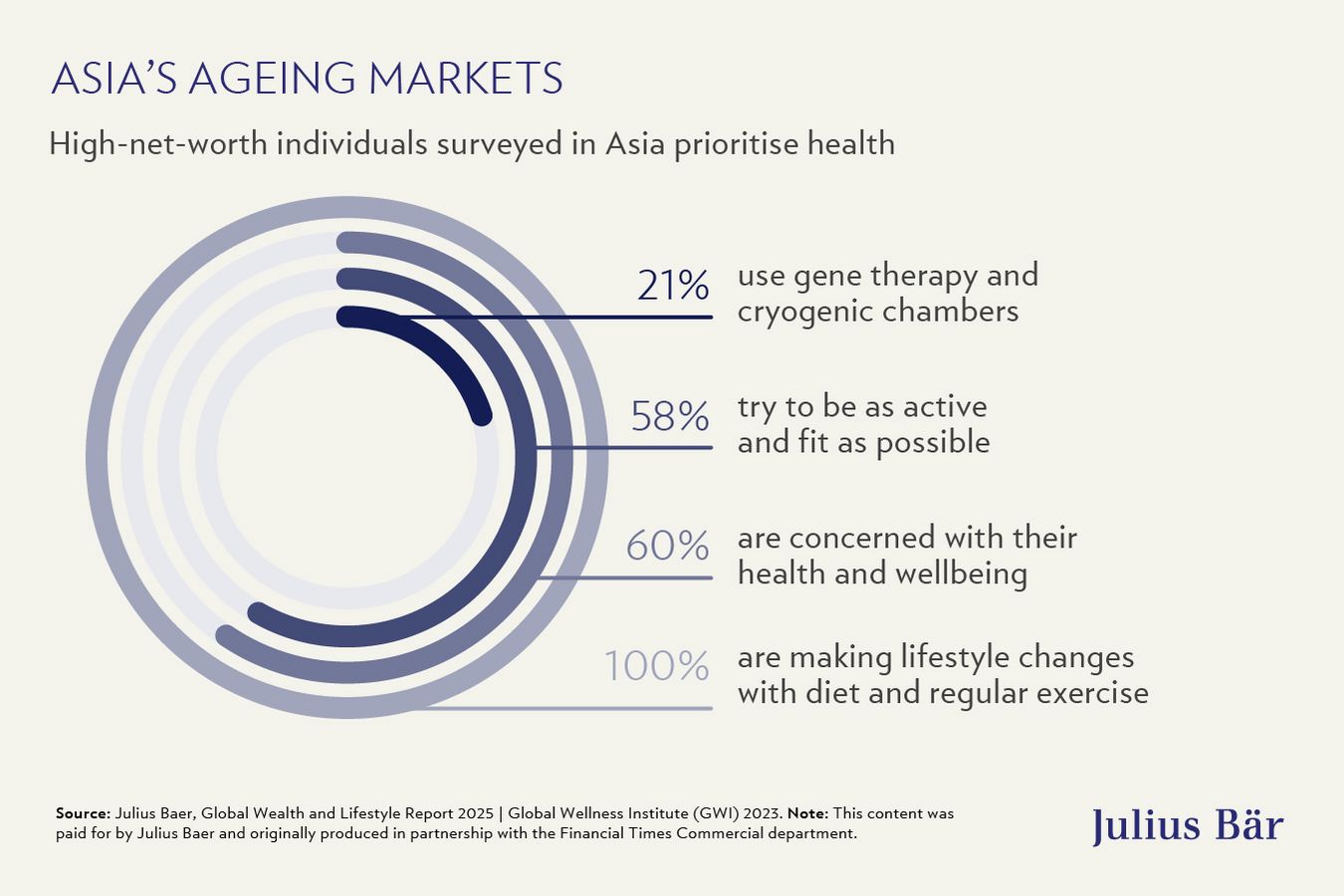
“Respondents to our Global Wealth and Lifestyle Report 2025, in almost all regions, say ‘I am concerned with my health and well-being’ and ‘I take steps to improve my health and my family’s health’,” says Dr Damien Ng, Senior Thematic Research Analyst at Julius Baer. “This is particularly the case for the majority of the ultra-high-net-worth individuals in the Asia-Pacific region, where personal and family well-being is not only rated a top priority, but the respondents also reported that they are more likely to be as active and fit as possible,” adds Ng.
Asia’s ageing markets
While the longevity industry is experiencing rapid growth worldwide, the fastest new uptake is in those previously underserved regions, Asia and the Middle East, now eager for world-class wellness infrastructure. Asia, with its ageing population and new middle and upper classes, is seeing high demand for preventive health and longevity services.
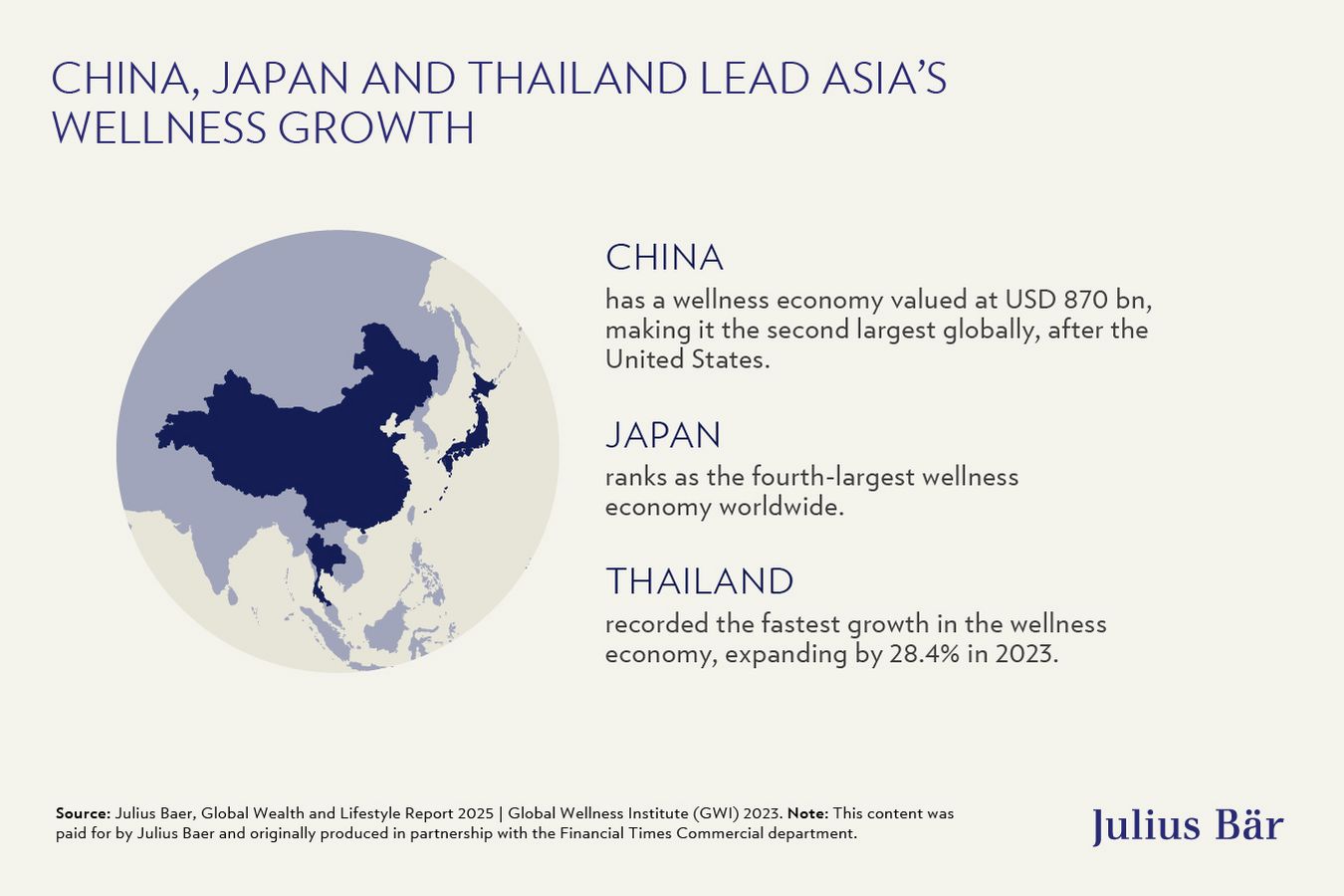
China, Japan and Thailand lead Asia’s wellness growth
High-net-worth individuals surveyed in Asia prioritise health
The interest in longevity in Asia means that Clinique La Prairie is expanding in the region. It has unveiled its first international health resort in Anji, China, (soon to follow in the Middle East is Amaala, Saudi Arabia), with another underway in Phuket, and is rolling out Longevity Hubs offering advanced diagnostics and therapies in cities such as Bangkok and Taipei. The company’s model blends advanced medical science with luxury wellness hospitality, positioning it to serve the top end of the market where demand is strongest. “Our programmes leverage advanced innovations such as DNA testing, epigenetics and metabolomics to customise treatments, alongside proven lifestyle practices,” says Gibertoni.
Gibertoni explains that clients receive in-depth medical assessments – everything from comprehensive blood panels and imaging to genetic and epigenetic testing – to get a detailed picture of their current health and ageing markers. Medically, a tailored programme might provide regenerative therapies or precision medications/supplements to target cellular ageing. In nutrition, the clinic designs meal plans and nutraceutical supplements to reduce inflammation and oxidative stress. Exercise and sleep are also carefully measured and tweaked.